
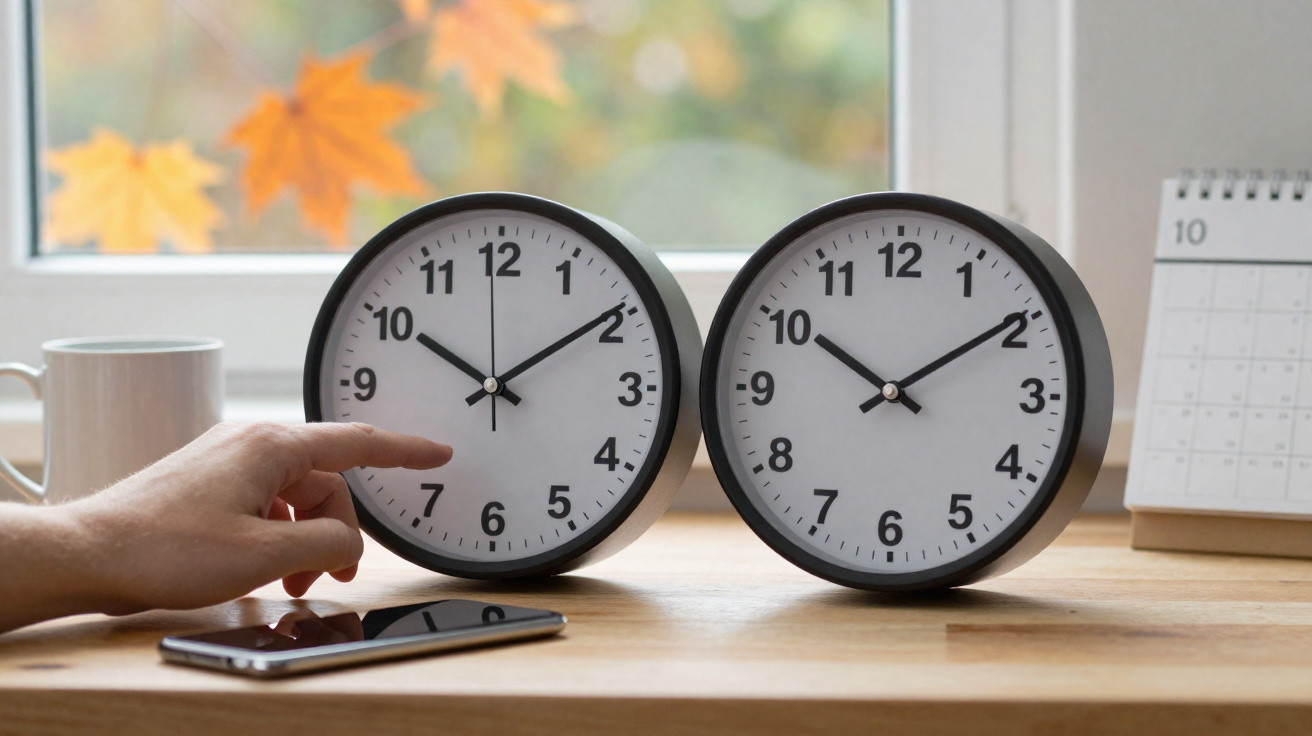
The autumn clock change can catch people out: an alarm goes off at the wrong time, the oven clock is still an hour ahead, or an early journey suddenly seems confusing. The key date is Sunday 25 October 2026, when clocks across the UK go back by one hour.
At 2am British Summer Time (BST), the clocks return to 1am Greenwich Mean Time (GMT). Most phones and internet-connected devices should update automatically, but manually set clocks, timers and alarms are worth checking before Monday morning.
The date and time clocks change in 2026
In the UK, BST ends on the last Sunday in October. In 2026, that falls on Sunday 25 October.
At the changeover:
- 2am BST becomes 1am GMT
- Clocks go back by one hour
- The UK moves from British Summer Time to Greenwich Mean Time
- The hour between 1am and 2am happens twice: first in BST, then in GMT
People often call this the move to “winter time”. GMT is the UK’s usual standard time, while BST is the one-hour seasonal adjustment used during the lighter months.
On Sunday 25 October 2026, put manually adjusted clocks back by one hour before bed on Saturday night, or once you wake up on Sunday.
Do clocks go forwards or backwards?
In October, clocks go back. If a clock reads 2am immediately before the change, it will read 1am straight afterwards.
A simple UK-friendly reminder is: clocks go back when the nights draw in. The opposite happens in spring, when clocks move forward by an hour on the last Sunday in March.
The spring change can be easier to forget because it removes an hour from the night. On the last Sunday in March, 1am GMT becomes 2am BST.
If you are changing a clock by hand, it is often easiest to do it before bed on Saturday. However, wait if you are working overnight, travelling late or relying on the clock for a timed task.
Which devices should update automatically?
Most modern connected devices should adjust without any action, as long as their date, time and time-zone settings are correct. These usually include:
- Smartphones and tablets set to automatic time and time zone
- Computers and laptops connected to the internet
- Smart speakers, smart TVs and connected home hubs
- Some cars with navigation or online services
- Radio-controlled clocks receiving the UK time signal
Still check anything important on Sunday morning. Automatic time updates can fail if a device has the wrong time zone selected, an old operating system or automatic settings switched off.
Clocks and timers worth checking by hand
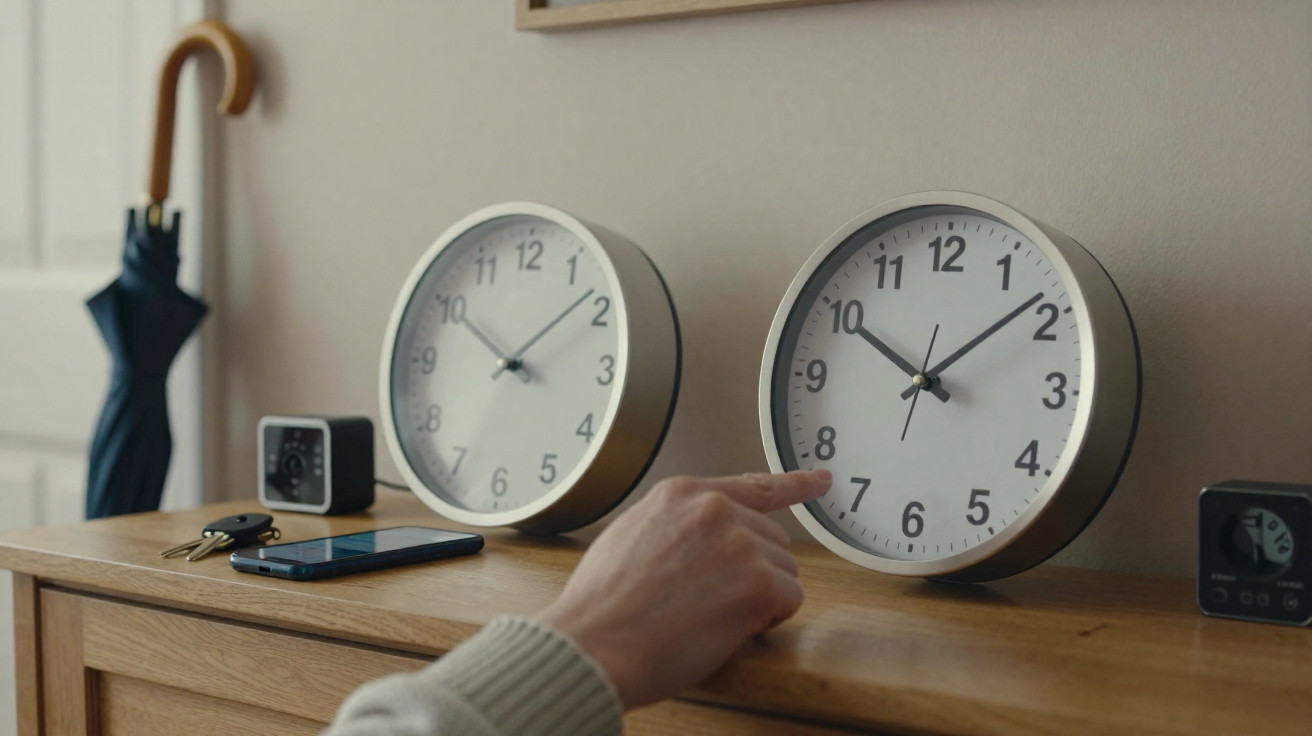
Make a quick round of the home for devices that are commonly missed:
- Analogue watches and non-smart fitness watches
- Wall, bedside and kitchen clocks
- Microwave, cooker and coffee-machine displays
- Heating programmers and older thermostats
- Car clocks, particularly in older vehicles
- Cameras, security systems and video recorders
- Timers controlling lights, aquarium equipment or garden lighting
Check the manual before altering heating or security settings. Some systems update themselves, while others require the time to be reset manually. Avoid pressing unfamiliar programme buttons: accidentally deleting a heating schedule can create more trouble than leaving the display an hour out.
Why the repeated hour matters
When BST ends, 1am to 2am occurs twice. This can matter for overnight journeys, work shifts, bookings and automated systems.
If you have an early flight, train, coach, ferry, hospital appointment or work shift around the clock change, check the operator’s timetable and your booking confirmation. Use the date and local time together rather than relying on memory.
Overnight workers may work an extra hour in real time, depending on their shift pattern. Employers and staff should follow the stated rota and workplace timekeeping arrangements rather than assuming the repeated hour is handled in the same way everywhere.
For travel and appointments in the early hours of 25 October, check the date, local time and time zone together.
Online meetings can also be affected. Countries do not all change their clocks on the same day, and some do not change them at all. Review invitations involving colleagues, customers or family abroad, especially if the meeting is scheduled for the following week.
Making the first week easier
An extra hour can sound like a bonus, and the October change is often less awkward than losing an hour in spring. Even so, a change in routine can leave some people feeling tired or out of step for a few days.
Young children, shift workers and people with tightly timed routines may notice the change more than others. A few simple habits can help:
- Keep bedtime and wake-up times broadly consistent over the weekend.
- Spend some time outside in morning daylight where practical.
- Do not use the extra hour as a reason for a much later night if you need to be alert on Monday.
- Check school-run arrangements, work alarms and recurring calendar reminders on Sunday evening.
- Take extra care driving after work as the darker autumn evenings begin earlier.
Wet leaves, low sun and earlier darkness can make autumn roads harder to read. Allow extra time, use lights appropriately and make sure you can see clearly before setting off.
If sleep problems persist or affect everyday life, seek advice from an appropriate healthcare professional rather than making drastic changes to sleep habits or medication.
Why does the UK change the clocks?
The purpose of BST is to shift more daylight into the evening during the lighter part of the year. When BST begins in spring, sunset is an hour later by the clock. When GMT returns in autumn, mornings become lighter by the clock again.
The UK has used seasonal clock changes in different forms over its history. The present arrangement is well established: BST begins on the last Sunday in March and ends on the last Sunday in October.
The system remains a subject of debate. Some people value lighter spring and summer evenings for leisure, travel and outdoor activities. Others dislike the disruption of changing clocks and the earlier darkness on winter afternoons.
Daylight is not experienced equally across the UK. Sunrise and sunset times vary significantly between the south of England, northern England, Wales, Scotland and Northern Ireland, particularly in winter.
Is the clock change ending in 2026?
No. The UK will continue to change between GMT and BST in 2026.
There has been discussion in Europe about ending seasonal clock changes, but there is no announced change to the UK’s arrangements for 2026. A change elsewhere would not automatically alter the UK system.
For now, the rule remains straightforward: clocks go forward on the last Sunday in March and back on the last Sunday in October. If official arrangements ever change, check current guidance from the UK Government or the relevant transport operator rather than relying on old posts or calendar reminders.
Common mistakes to avoid
The same errors appear every autumn:
- Putting clocks forward instead of back. In October, you gain an hour, so move manually set clocks back.
- Assuming every device changes itself. Kitchen appliances, cars and older heating timers often do not.
- Changing a clock too early. This can cause confusion if you are travelling late or working through the night.
- Ignoring international time zones. A meeting with people abroad may not shift at the same time as the UK.
- Trusting an old recurring alarm. Check the actual alarm screen on Saturday evening and again on Sunday night.
- Using the date as the only smoke or carbon monoxide alarm reminder. Test alarms in line with the manufacturer’s instructions, and use only the specified replacement batteries where relevant.
A practical checklist for Saturday 24 October
Before bed, take a couple of minutes to prepare:
- Confirm that your phone uses automatic date, time and time-zone settings.
- Check Monday’s alarm, plus any alarms used by children or other household members.
- Put analogue watches and household clocks back by one hour, or leave them until Sunday morning.
- Check travel plans if you are leaving early on Sunday.
- Review heating, lighting and appliance timers that are not connected to the internet.
- Remember: 2am BST becomes 1am GMT.
The essential point is simple: at 2am on Sunday 25 October 2026, UK clocks return to 1am and GMT begins. A brief check of manual clocks, alarms and timers should help the extra hour feel useful rather than turning into Monday-morning confusion.




Comments
No comments yet. Be the first to comment!
Leave a Comment