
It can become a warm, green soup if you collect it badly. The key is to capture it cleanly, store it calmly, and use it before bacteria take hold.
I still remember the first summer storm that had me running into the garden with a bucket. The gutters were hissing, the air carried that hot-pavement smell, and I felt like a child hunting for treasure. Two days later, my treasure stank of frog pond, with a trembling layer of slime across the top. I almost tipped it onto my monstera, but stopped at the last moment and looked at the surface as though it might blink. That was when I rang a gardener who had encountered every rain-barrel error imaginable. He did not laugh. Instead, he laid out the simple sequence for clean rainwater, from roof to leaf, so clearly that I wrote it on masking tape and fixed it to the barrel. The solution began at the roof.
Why rainwater can be beneficial - and when it becomes a problem
Fresh rainwater is generally soft and mildly acidic, which houseplants tend to love. With fewer dissolved minerals, there are fewer crusty salt deposits on the soil surface and roots are happier. That is the benefit people notice in the first week after changing from hard tap water. Foliage appears brighter. The compost seems more open. Watering becomes simpler.
Then something strange can occur. A week later, the barrel left in the sun behind the shed smells of wet dog and compost. A fine film appears. Perhaps a mosquito buzzes by your ear. We have all looked at a watering can and silently decided that the snake plant can wait. It is not overreacting; it is biology at work in warm, uncovered water containing dust and leaf debris.
The reasoning is straightforward. Bacteria require three things: nutrients, warmth and time. Roof dust, pollen, bird droppings and gutter debris provide food. A transparent container in sunlight supplies warmth. Still water gives them unlimited time. Indoors, the concern is not that your pothos will collapse - it is splashing or misting contaminated water and inhaling aerosols. By keeping water dark, cool, clean from the outset and stored only briefly, you disrupt that triangle. That is the entire approach.
A practical clean rainwater collection routine
Begin with the roof. Do not collect water from lead-painted surfaces or deteriorating asphalt felt; most modern roof tiles, slate and metal are suitable. Install a gutter guard or leaf screen. Fit a basic first-flush diverter or swing elbow that directs the first few minutes of dirty rainfall into the drain. This “roof rinse” removes pollen and bird mess. Afterwards, send the cleaner flow through a 200–300-micron mesh pre-filter into an opaque, food-grade container with a secure lid and a tap positioned close to its base.
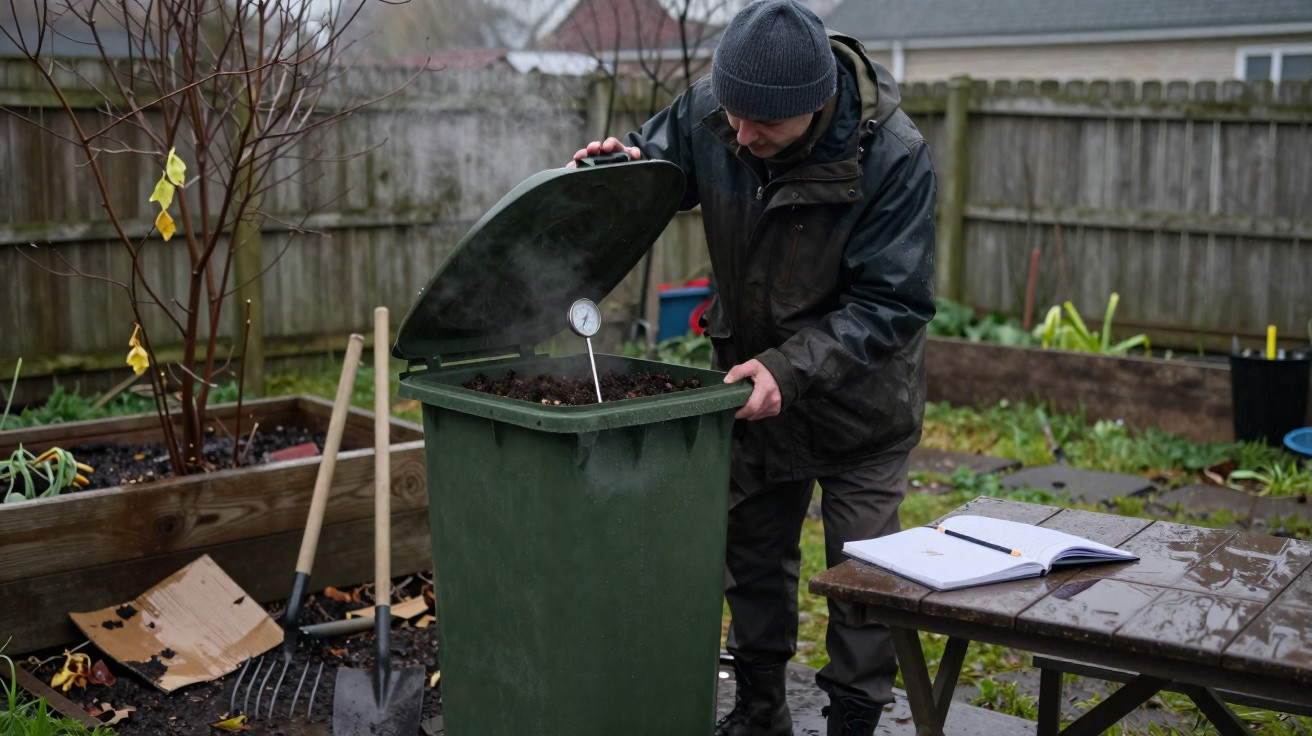
Keep the container in the shade and mark the lid with its collection date. For indoor plants, use the rainwater within 7–10 days - put that on the tape as well: use within 7–10 days. Rinse the pre-filter after every storm. Empty the barrel once a month and scrub it using hot water with a small amount of unscented bleach, then rinse it until no odour remains. Position the lower tap a few inches above the base, so sediment that has settled stays in place while you fill the watering can.
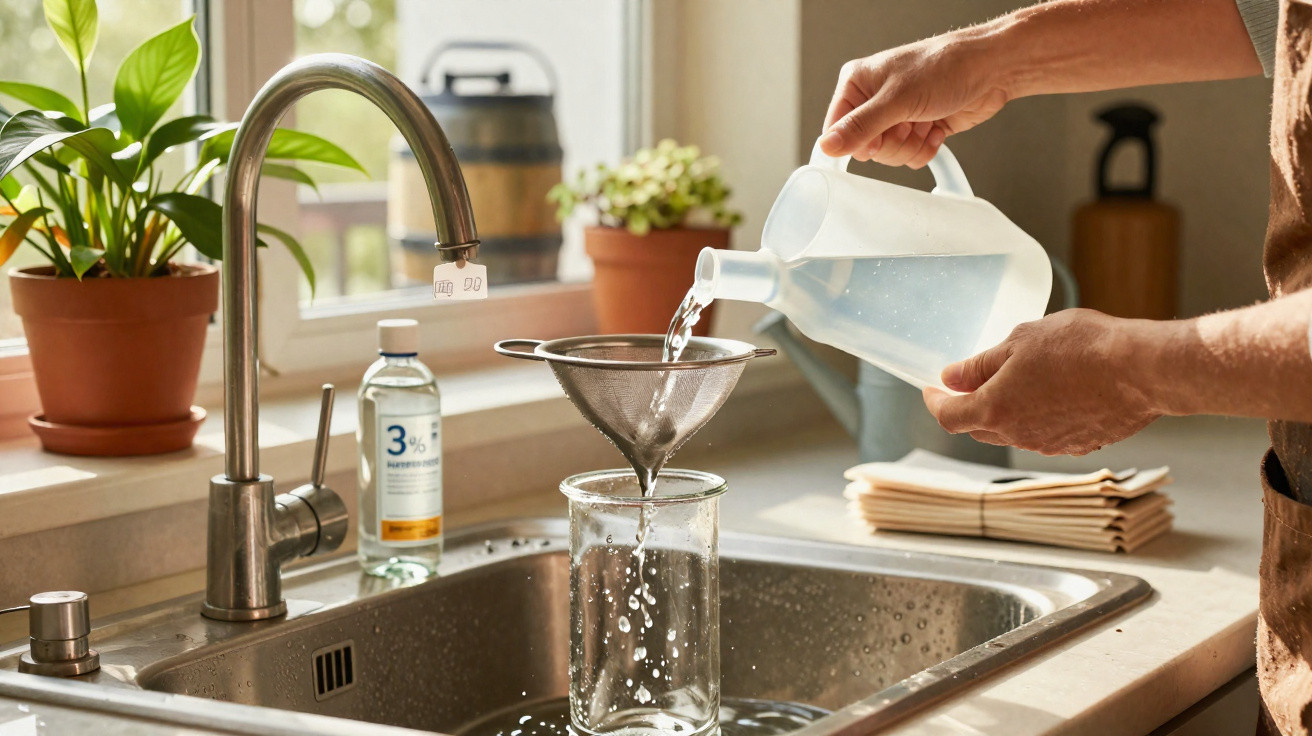
Realistically, nobody manages all of that every day. This is why small decisions count more than grand efforts. Keep it dark. Keep it cool. Avoid storing too much. For an extra safeguard before watering, treat the can rather than the barrel: add 3% hydrogen peroxide at 1 teaspoon per gallon (about 5 ml per 3.8 L), wait five minutes, then water the soil rather than the leaves. The plants will not notice, but microbes will.
Rainwater tips, warnings and a gardener’s home routine
Here is the gardener’s advice in its simplest form. He collects only after the first five to ten minutes of a storm, or once the season’s first dirty rainfall has washed the roof. He uses a black container with a lid, kept in dappled shade, along with a filter basket that can be rinsed one-handed. A spare watering can stays indoors; he fills it from the tap and waters within two days. Short cycles and easy habits.
The usual mistakes can be subtle. Leaving the lid off “just for the afternoon” allows in sunlight and insects. Clear storage boxes become algae farms. Putting your hand into the barrel disturbs the sediment and activates biofilm. Misting houseplants with rainwater indoors disperses aerosols you should not be breathing. If you have left it too long and the water smells wrong, it is not a personal failure - it is compost tea. Start with a fresh batch and keep the water moving. In busy weeks, I add tap water instead and stop fretting.
When I asked the gardener on the phone whether there was a magic product, he laughed. His answer was more direct than I expected:
“Clean in, dark and cool, then out again fast. That’s it. The safest water is the water you don’t store for long.”
- First flush: divert the initial dirty runoff after every rainfall.
- Pre-filter: use a 200–300 μm mesh basket or sock that is easy to rinse.
- Container: choose an opaque, food-grade container with a tight lid, placed in shade.
- Timing: label the date and try to use the water within a week.
- Before use: optionally add H₂O₂ to the watering can; water soil, not leaves.
Storage, basic disinfection and comfortable indoor use
The understated reality is that indoor plants do not need aged rainwater; they need regular, low-stress watering. Keep each batch small enough to use up within a week. If a heatwave arrives and the barrel is warm when touched, leave that batch alone and collect water during the next storm. For belt-and-braces reassurance, add 3% hydrogen peroxide to the watering can at 1 tsp per gallon, wait five minutes, then pour slowly and close to the soil to prevent splashing. Do not mist foliage indoors with stored rainwater. Using an aquarium stone for aeration may help maintain short-term freshness, but it also disturbs biofilm, so it is not a complete solution. Clean the container monthly with hot water and a tiny bleach wash, rinse it thoroughly, and keep the lid closed. Repeat the small measures. Your plants will show you when it is working.
| Key point | Detail | Benefit for the reader |
|---|---|---|
| First flush matters | Discard the first 5–10 minutes of runoff after every rainfall | Removes most germs and grit at the source |
| Dark, cool, closed | Opaque, lidded, shaded, food-grade container | Slows bacterial growth and prevents algae blooms |
| Short storage window | Label the date and use within 7–10 days | Safer water, a fresher smell and happier houseplants |
FAQ:
- Can I use rainwater from any roof? Choose modern tile, metal or slate where possible. Avoid peeling lead paint, tar felt or treated timber, which may leach unwanted substances. If unsure, begin with a small, separate downpipe.
- Is boiling necessary for indoor plants? No. Boiling is intended for drinking water and is unnecessary for watering soil. Prioritise clean collection, darkness, cool storage and short storage periods.
- What about chlorine or bleach in the water? Use bleach only to clean the container, not to treat the barrel water. For a mild treatment immediately before use, hydrogen peroxide in the watering can is gentler and suitable for plants.
- Can I mist leaves with stored rainwater? Avoid misting indoors. Splashes and aerosolised stored water increase exposure risk. Instead, water the soil slowly and close to its surface.
- How do I know whether the water has gone bad? Unpleasant smells, a visible film, cloudiness or a green tint mean it is time to start again. Tip it onto outdoor soil, rinse the barrel and collect water from the next clean storm.

Comments
No comments yet. Be the first to comment!
Leave a Comment