
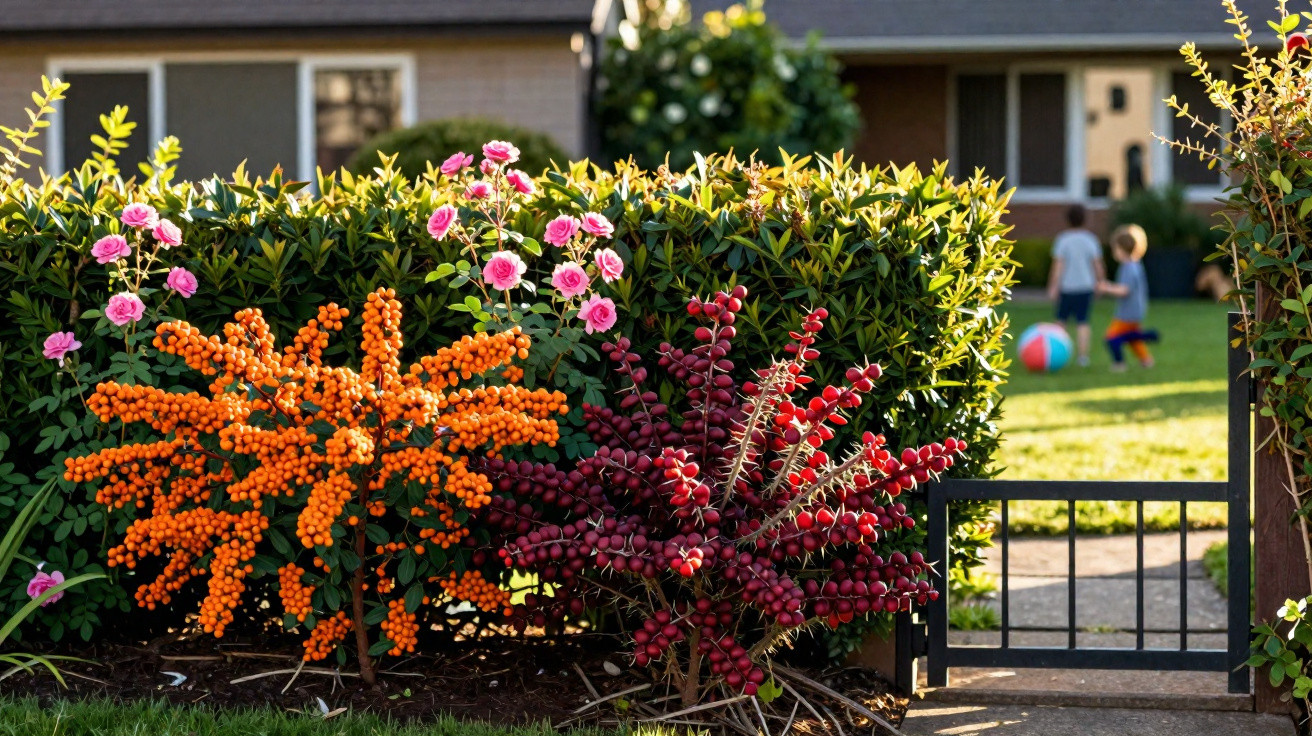
Most people first think of an alarm system, smart camera or security door. What is less widely known is that the garden can become a quiet yet highly unpleasant obstacle for burglars. With the right design, certain highly defensive plants can turn the route to a window into a painful barrier that thieves would rather avoid.
How thorns and dense growth genuinely deter burglars
Burglars prefer easy options. They look for routes that are quick, quiet and carry little risk of injury. When access becomes difficult, their chances of being noticed increase – and that is where a defensive hedge comes in.
“A dense, heavily thorned hedge combined with crunching gravel makes access not only uncomfortable, but also noisy and slow.”
Anyone forcing their way through a thorny barrier is more likely to get caught up, injured and delayed. Their movements become more frantic and the noise increases. Some security analyses from Europe indicate that properties with deliberately designed barriers of prickly plants and clearly audible ground surfaces make a measurable contribution to deterring unwelcome visitors.
One aspect is often overlooked: an overgrown hedge is more helpful to criminals. Unpruned shrubs create ideal hiding places. A well-maintained but unwelcoming approach is far more effective than an unmanaged jungle in which someone can easily crouch down.
Four plants that turn the garden into a natural defensive zone
The focus is on four species that need comparatively little maintenance while creating a robust, and sometimes painful, barrier:
- Pyracantha (firethorn): an exceptionally thorny shrub, ideal as a hedge along fences or beneath windows.
- Barberry (Berberis): a compact, heavily spined shrub that works well beside paths and at concealed access points.
- Rosa rugosa (Japanese rose / rugosa rose): a very prickly wild rose, perfect for beds directly beneath easily reached windows.
- Cherry laurel: an evergreen privacy screen that chiefly prevents direct views of patios and glazed frontages.
Firethorn: the classic choice for painful surprises
Firethorn is regarded as one of the most effective options. Its extremely sharp thorns can readily penetrate thin clothing. In autumn, the shrub also adds visual interest with its berries and provides food for birds.
- Best location: along property boundaries, beside fences and beneath low windows
- Planting distance: around 50 to 70 centimetres for a dense hedge
- Height: usually manageable at between 1.5 and 2 metres
Regular pruning is important. This keeps the hedge impenetrable without allowing it to spread too far across footpaths. Households with young children should leave some distance between it and heavily used areas.
Barberry: compact, dense and full of spines
Barberries make ideal “stoppers” at side entrances and behind less visible corners. Their numerous fine thorns ensure that nobody willingly crawls through them.
Those who like a splash of colour can choose varieties with red foliage. They are decorative while serving the security purpose at the same time. As with firethorn, pruning once or twice a year helps the shrub retain its function as a barrier.
Rosa rugosa: a rose bed as a defensive belt
Rosa rugosa has a bushy habit, sends out vigorous growth and develops dense, thorny stems. That is precisely what makes it so useful directly in front of easily accessible ground-floor windows.
“Burglars are reluctant to climb through a rose bed where every step and every grip can become painful.”
The plant flowers abundantly, often with an intense scent, and produces rose hips in autumn – an advantage for anyone wanting to combine security with traditional garden ornament. One important point: keep its runners under control so that the planting does not spread unchecked.
Cherry laurel: privacy screening rather than thorns
Unlike the other options, cherry laurel has no thorns, but it serves another key purpose: it prevents burglars from having a clear view into the home. If they cannot clearly see what is behind a glazed frontage, it is harder for them to judge whether taking the risk is worthwhile.
- Where to use it: in front of patio doors, full-height windows and exposed gardens
- Effect: a visual barrier, privacy protection and deterrence through uncertainty
As cherry laurel is toxic, owners of pets and young children should consider the planting carefully and check alternatives where appropriate.
How to position the plants without spoiling the garden
The aim is a garden that looks welcoming but presents a burglar with a series of risks. A proven basic layout can be adapted easily:
- Facing the street: cherry laurel for privacy, with a strip of gravel in front.
- Along the sides: firethorn or barberry as a dense, defensive hedge.
- Beneath ground-floor windows: beds of Rosa rugosa forming a “rose barrier”.
- Main approach: a path surfaced entirely with gravel or chippings that crunch loudly under every footstep.
Importantly, the front door should not be completely screened from view. A visible entrance enables neighbours and passers-by to spot suspicious behaviour. Motion-activated lighting also adds to the pressure on intruders.
Planning, maintenance and legal boundary distances
For tall hedges, many local authorities require a distance from the property boundary once a certain height is reached. As a rule of thumb, allow two metres from the boundary if the hedge is intended to grow taller than two metres – but it is worth checking local requirements before planting.
“Anyone who maintains their ‘security hedge’ benefits twice over: greater deterrence and fewer hiding places for strangers.”
A thorough cutback should be carried out at least once a year, or preferably lighter pruning twice yearly. This keeps routes clear for the household and ensures emergency exits remain usable. With every measure, remember that the fire and rescue service and ambulance crews must still be able to gain access or move quickly through designated areas in an emergency.
What combining plants with security technology adds
Thorny plants alone do not solve every issue, but they can substantially reinforce other security measures. For instance, planting a prickly hedge beneath windows and adding a motion sensor with a floodlight creates a double obstacle: more difficult access and immediate illumination.
Useful additions include:
- Cameras positioned visibly at main entrances
- Timed blinds that simulate occupancy
- Indoor lighting using random programmes rather than fixed schedules
The combination of an unpleasant route, limited visibility and technical surveillance often means offenders remove a property from their list before making their first attempt.
Practical advice for families and pet owners
Heavily spined shrubs do not belong near play areas, trampolines or sandpits. Anyone with children in the garden should create a clear separation between the security zone and the play area. Routes to the patio, garage and wheelie bins should remain wide and unobstructed.
Pet owners should check which varieties are safe for dogs and cats. Toxic berries or leaves, such as those of cherry laurel, can become an issue if animals like to chew plants.
Why the combination of nature and strategy works so well
Burglars often assess a property first: Is it easy to hide? Are there noisy surfaces? How quickly can I reach the target, and how easily can I get away again? A structured garden with deliberately placed, unpleasant obstacles makes the answer to every one of these questions less favourable.
Anyone already considering a garden redesign can use these four plants not only to improve its appearance, but also to create a visible and, above all, tangible obstacle for unwelcome visitors – without barbed wire or a concrete wall.

Comments
No comments yet. Be the first to comment!
Leave a Comment