
Winter has ended and the lawn looks worn out – but three straightforward jobs in March can bring it back to life surprisingly quickly.
Many gardeners will recognise the scene: yellow patches, puddles, soft areas and, above all, plenty of moss. The encouraging news is that a few well-chosen spring tasks can turn tired turf back into a hard-wearing, dense carpet – without resorting to chemicals.
What a mossy lawn in March is really telling you
Moss is not the enemy; it is a signal. Looking at the lawn in March is, in effect, a way of diagnosing the soil. Where cushions of moss are spreading, the cause is usually excessive moisture and compaction, often made worse by shade and regular use.
Grass prefers loose, well-aerated soil. Waterlogging, compressed surfaces and persistently damp spots slow growth, deprive roots of oxygen and create bare patches. Moss quickly takes advantage of these gaps because it manages with little nutrient supply and oxygen.
“Anyone who merely scratches out moss is treating a symptom. Anyone who works the soil tackles the cause.”
The best time to let the soil “breathe” again is from late February to late March, depending on the region and the weather. Frost should have passed, the ground should no longer be soaking wet, and the grass should be beginning its growing season.
Task 1: Loosen the soil with a garden fork
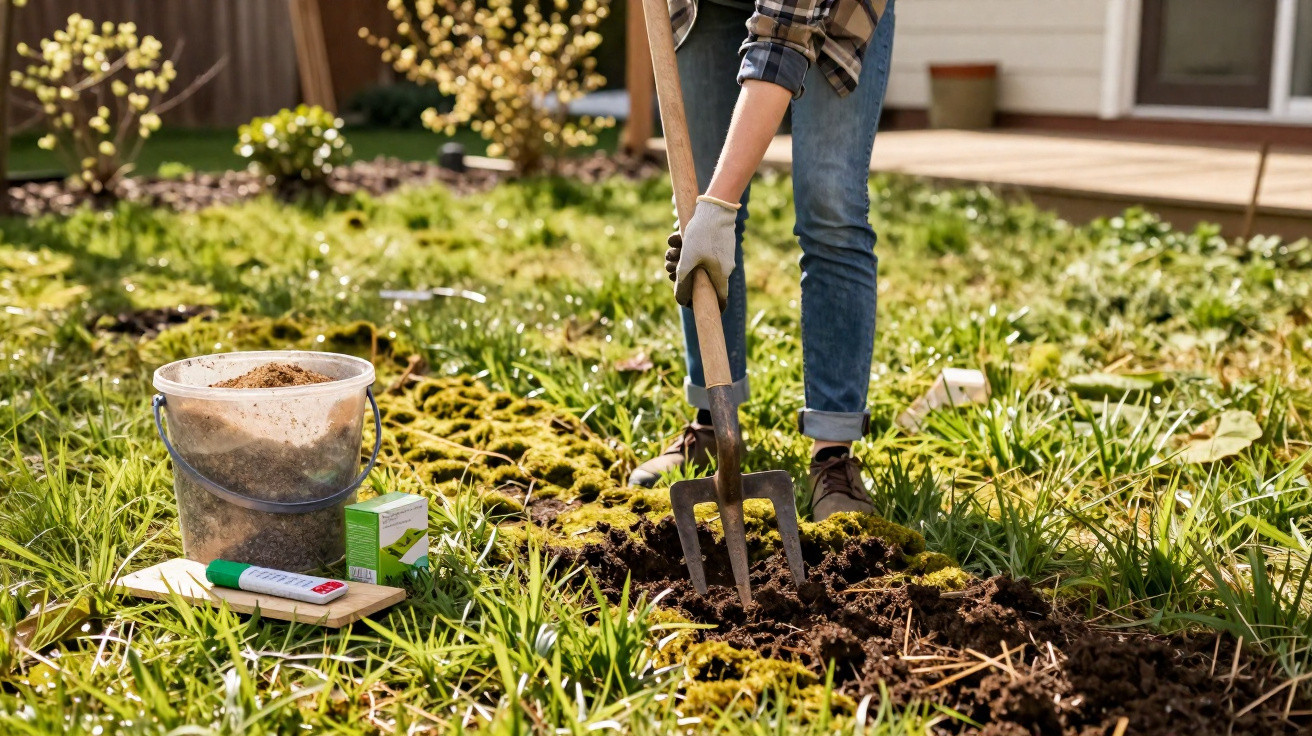
The first job may seem unremarkable, but it has the greatest impact: pierce the lawn with a garden fork, or a spiked lawn aerator. This creates channels that allow air and water to reach deeper soil layers more effectively.
A step-by-step approach for home gardeners
- Push the garden fork into the ground at intervals of around 15 centimetres.
- Allow the tines to penetrate 8 to 10 centimetres deep.
- Tip the handle gently backwards or to one side so that the soil opens slightly.
- Move forward a short distance and repeat the process across the entire area.
Pay particular attention to places where puddles collect or where the ground feels hard and “dull” underfoot. These are the most heavily compacted sections. If time is limited, tackle these problem areas first.
These “air shafts” help excess water drain away more quickly and allow oxygen to reach the roots again. They also create routes through which nutrients can later filter deeper into the soil.
Task 2: Apply a light top dressing for nutrients and improved drainage
Once the ground has been loosened, add a thin layer of a loose mix – known to gardeners as top dressing, or lawn sand with an organic component. It fills the holes made by the garden fork and gradually improves the structure of the soil.
A proven mix to use
If the ingredients are available at home, combine roughly equal amounts of:
- finely sieved topsoil,
- coarse sand, such as play sand or river sand,
- sieved leaf mould or mature garden compost.
If compost is unavailable, sand mixed with a little loose soil will also do. The important thing is that the material contains no root fragments, weed seeds or large clumps.
Spread the mixture thinly over the aerated area. A stiff yard broom, a twig broom or a robust lawn brush can be used to work it in. The aim is to fill the holes while leaving only a light dusting over the turf – the grass blades should remain visible.
“A thin blend of sand and compost in the aeration holes works like a natural drainage pipe and a small dose of fertiliser at the same time.”
The sand improves drainage, while the compost adds organic matter. Over time, this produces soil that is less prone to compaction and better supports grass-root development. The lawn can then grow denser, leaving less room for moss.
Task 3: Rake out moss thoroughly and mow high
Only after preparing the soil should you tackle the moss itself. A vigorous pass with a metal rake or scarifying rake removes old plant material, thatch from dead roots and cushions of moss.
The right way to clear the lawn
- Let the lawn dry as much as possible, as less material will stick together.
- Pull the rake across the area both lengthways and crossways.
- Sweep up the loosened debris thoroughly or collect it with a wheelbarrow.
- Put suitable material on the compost heap; allow large quantities of moss to rot down separately.
Afterwards, the lawn often looks alarmingly bare. That is precisely where the temptation lies: many owners panic and reach for quick-fix products or harsh treatments. In reality, the lawn simply needs a few days of rest.
Finish by mowing the lawn. For the first cut of the year, set the mower blade relatively high. A cutting height of four to five centimetres is a useful guide. This encourages the grass to branch out without weakening the stressed turf further.
“After this treatment, the lawn can quite happily look half-bare for a week – it will recover all the more vigorously afterwards.”
When is the right time in spring?
In mild areas, this lawn care can begin on a dry day in late February. In cooler locations, it is better to wait until the soil is no longer frozen and has warmed slightly – usually from mid to late March.
Important conditions are:
- no frozen ground,
- no waterlogged, squelching surface,
- at least one reasonably dry afternoon available.
If you want to complete the whole process in one session, an afternoon is usually enough: aerate, work in the mixture, rake out the moss and mow gently. Rain over the following days is actually welcome, as it helps the organic layer settle into the soil.
Additional tips for a permanently dense lawn
Alongside the three March jobs, it is worth considering the wider conditions in the garden. Constant shade from dense hedges or tall trees encourages moss. Grass is reluctant to grow in very dark corners anyway, so those spots can instead be planted with shade-tolerant ground cover or covered with mulch.
How the lawn is used also matters. Repeated football in the same place, barbecue areas or trampoline sites continually compact the ground. In heavily used areas, the following can help:
- regular aeration during the season,
- overseeding specific patches with hard-wearing seed mixes,
- wooden or rubber mats beneath play equipment.
Nutrient supply is another important part of the picture. A modest lawn feed in spring gives the grass the resources it needs to close bare areas. Organic fertilisers and slow-release fertilisers act more gradually, but last longer and are gentler on the soil.
Why moss does not have to disappear completely
It is also worth taking one final look at moss itself: it is not poisonous to the garden, but rather a “pioneer plant” that grows where grass struggles. Between stepping stones, at the base of shady walls or along bed edges, moss can even be left deliberately, creating a soft green appearance.
In the lawn, however, its presence indicates where the soil needs support. By setting aside a little time each spring, completing the three tasks in sequence and keeping an eye on the lawn, you can build a resilient, rich-green carpet over the long term – with fewer chemicals and far more enjoyment when walking barefoot.




Comments
No comments yet. Be the first to comment!
Leave a Comment