
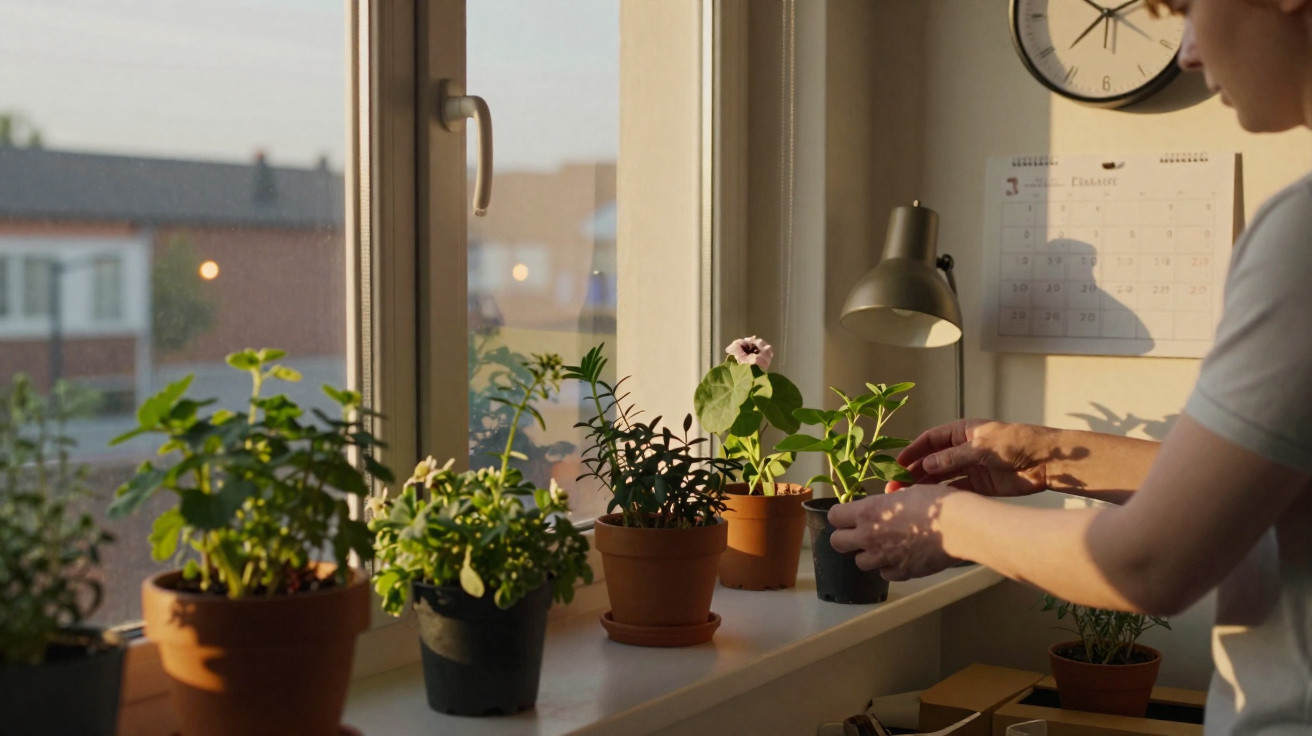
The street below is still noisy with late buses and fragments of podcasts, while the basil on the windowsill has fallen silent. A fortnight ago, it was producing fresh leaves overnight: lush, determined growth. Now the stems seem weightier and the green has lost some of its brightness, as though the plant has breathed out and decided: that’s enough for today.
I have not replaced the soil. My watering remains just as erratic, with the same faint sense of guilt. The radiator continues to hum at its normal setting. Still, something in the room has changed - something you only notice when you really look.
Plants pick it up without effort.
The silent signal plants are always listening for
Scientists favour tidy terminology and call it “photoperiod”. Gardeners put it more plainly: day length. As daylight hours lengthen or shorten, plants receive the signal well before we reach for winter coats or begin Googling “heatwave how long”.
They have no need for a weather app; they simply interpret the sky.
As days shorten and nights extend slightly, plenty of plants begin to slow down. Growth becomes gentler, flowers pass, and roots store away energy, as if an internal dimmer has been lowered in every leaf. The sun still comes up, but its timetable is different.
Look at a city park towards the end of August and this signal becomes visible as a wave moving in slow motion. Only weeks before, the lawn was surging, dandelions pushing upwards between visits from the mower, and rose beds competing in extravagant colour.
Then, one morning, that same place seems … gentler. The grass keeps growing, but the frantic rush has eased. Seed heads on ornamental grasses begin to keep their form instead of stretching ever higher. Birch trees try out one yellow leaf, like a careful first version of autumn.
There is no dramatic single-day event. No abrupt frost or storm. The genuine difference is simply a few minutes of lost daylight, accumulating quietly each day in the background.
Plants are not making guesses. Within their cells, a protein known as phytochrome acts as a tiny accountant for day length. It changes between two forms according to the colour of the light reaching it, then feeds that information to the plant’s internal clock. Long day? Short night? Or the reverse?
That basic calculation guides major decisions in a plant’s life: when to bloom, when to build stronger roots, when to shed leaves to conserve water, and when to become completely dormant through the cold.
They don’t wait for disaster to strike; they act on the forecast written in the sky. This subtle environmental signal is not so much about the light we can see as the pattern the plant retains.
What this means for your windowsill, garden, and plate
Once you understand that plants respond to day length, you begin caring for them in another way. Rather than holding yourself responsible for every drooping leaf, you check the calendar and note the time of sunset.
Consider houseplants. As autumn approaches, many tropical plants on a shelf enter “slow mode”. They are programmed to register longer nights. Continue feeding and watering them as though it were high summer, and your routine no longer matches their internal clock. Roots then remain in damp compost for too long, leaves turn yellow, and fungus gnats arrive as if they own the place.
The answer is straightforward: align your care routine with the rhythm of light, rather than your feelings or diary.
Farmers have made use of this understated signal for decades, at times without using Latin names and simply through close observation. In northern Japan, rice varieties are selected specifically for their response to day length, allowing them to flower before autumn cold damages the harvest.
Florists rely heavily on it as well. Have you ever wondered why poinsettias turn red so reliably for Christmas, every year? Commercial growers actively manage their nights, providing prolonged, uninterrupted darkness many weeks beforehand. Even a streetlamp shining through a greenhouse window can postpone the colour shift, because the plant “thinks” the night is too brief.
The crispness of supermarket lettuce also depends on photoperiod science. Certain varieties bolt and become bitter when daylight lasts too long, while others stop developing when the daylight period is very short. Seed companies discreetly label and trial them, so that we can carry on pretending salad is uncomplicated.
Beneath all of this lies a simple survival principle. In nature, choosing the wrong week can be fatal. A plant that waited for frost before beginning to slow down might lack time to transfer sugars from its leaves to its roots. If it flowered at an arbitrary time, its pollinators might not be present.
Day length is the stable clue that seasons cannot imitate. Temperatures fluctuate, and rainfall patterns change. An unusually warm spell in February can mislead even tough species, whereas the number of daylight hours changes very little from one year to the next.
Evolution has therefore taught plants to trust the sun’s timetable rather than the drama of the weather. That is the straightforward rule beneath both beautiful gardens and precise farming.
How to use this quiet cue in everyday life
You need no laboratory equipment to respond to photoperiod - only the habit of paying attention to the light. Begin by giving your plants a simple seasonal reset. When you find yourself turning lamps on earlier in the evening, take it as a sign that your plants are “hearing” the same change.
Reduce feeding for indoor plants that naturally slow down in winter. Leave a few extra days between waterings, particularly for species that dislike having wet feet. In outdoor beds, allow some late-summer growth to remain so plants can store energy as daylight decreases, rather than cutting everything back into obedient neatness.
Think of yourself not as a boss, but as an interpreter between the season and the soil.
One frequent error is resisting a plant’s clock because we expect year-round performance. We continue fertilising a ficus in December, then worry when it loses leaves. We push tomatoes beneath bright grow lights for months and wonder why the later fruit tastes watery.
There is a form of kindness in allowing plants to slow down when their internal calendar says they should. You can still help: use a grow light on a timer for seedlings, so they reach a chosen “day length”, or hang a sheer curtain to soften harsh, seemingly endless summer evenings for shade-loving plants. The purpose, though, is to guide rather than force.
We have all had that moment of looking at a wilting plant and asking, “What did I do wrong this week?” At times, the answer is nothing. The days have simply become shorter.
Sometimes the best plant care is to stop asking for summer behaviour in a winter body.
- Watch the clock, not just the forecast
Pay attention when sunrise moves later or sunset arrives earlier. Adapt watering and feeding to those changes, rather than to social media reminders. - Play with artificial “seasons”
For long-day plants, including many annual flowers, put grow lights on a timer to extend the day they perceive and encourage earlier flowering. - Protect the darkness
With short-day flowering plants such as Christmas cactus and poinsettias, prevent night-time light pollution from hallway lamps or streetlights from disrupting their timing. - Let some plants rest on purpose
Stop using fertiliser on species that naturally become semi-dormant. A quiet spell now is often the cost of really abundant growth later. - Match plants to your latitude
If you live far north or south, select varieties bred for your local pattern of day length. They will synchronise more readily with local light, and you will have to fight them less.
What else are they hearing that we can’t?
Once you notice photoperiod, quiet signals start appearing everywhere. Trees along a street come into leaf in unsettling unison. A neighbour’s hedge blooms a whole two weeks before yours because a building blocks some of its evening light. Your own energy rises and dips with changing day length too, whether or not you acknowledge it.
Plants do more than react to their surroundings: through these almost invisible signals, they record them season after season. Hours of light. Hints of temperature. Patterns of moisture. We pass through this information every day with barely a thought, while roots and leaves alter themselves with patient accuracy.
There is something oddly reassuring about that. Our lives seem quicker and more disorderly, increasingly directed by alerts that ping rather than by sunrise. Plants continue quietly on another timetable, following a principle as ancient as the rotating Earth: pay attention to day length, and respond before it becomes urgent.
Perhaps that is the easily missed lesson in your wilting basil and in your grandmother’s roses that bloom exactly on schedule: slowing down is not laziness; it is timing. In the plant world, timing is written in light.
| Key point | Detail | Value for the reader |
|---|---|---|
| Plants measure day length | Light-sensitive proteins and internal clocks allow them to track the duration of days and nights | Helps explain why growth, flowering and leaf drop occur when they do |
| Care should follow light, not habit | Adapt watering, feeding and pruning when seasonal shifts in sunrise and sunset become noticeable | Lowers plant stress and helps prevent familiar problems such as rot or weak flowering |
| You can gently bend seasons | Timed lights or protected darkness can affect when certain plants flower or rest | Allows you to schedule flowers, harvests and indoor displays around your real-life calendar |
FAQ:
- Question 1 What’s the difference between light intensity and day length for plants?
- Question 2 Can I “trick” my houseplants into growing faster with more light hours?
- Question 3 Why do some plants bloom only in winter?
- Question 4 Does street lighting really affect nearby trees and shrubs?
- Question 5 How do I know if a plant is resting because of short days or actually sick?


Comments
No comments yet. Be the first to comment!
Leave a Comment