
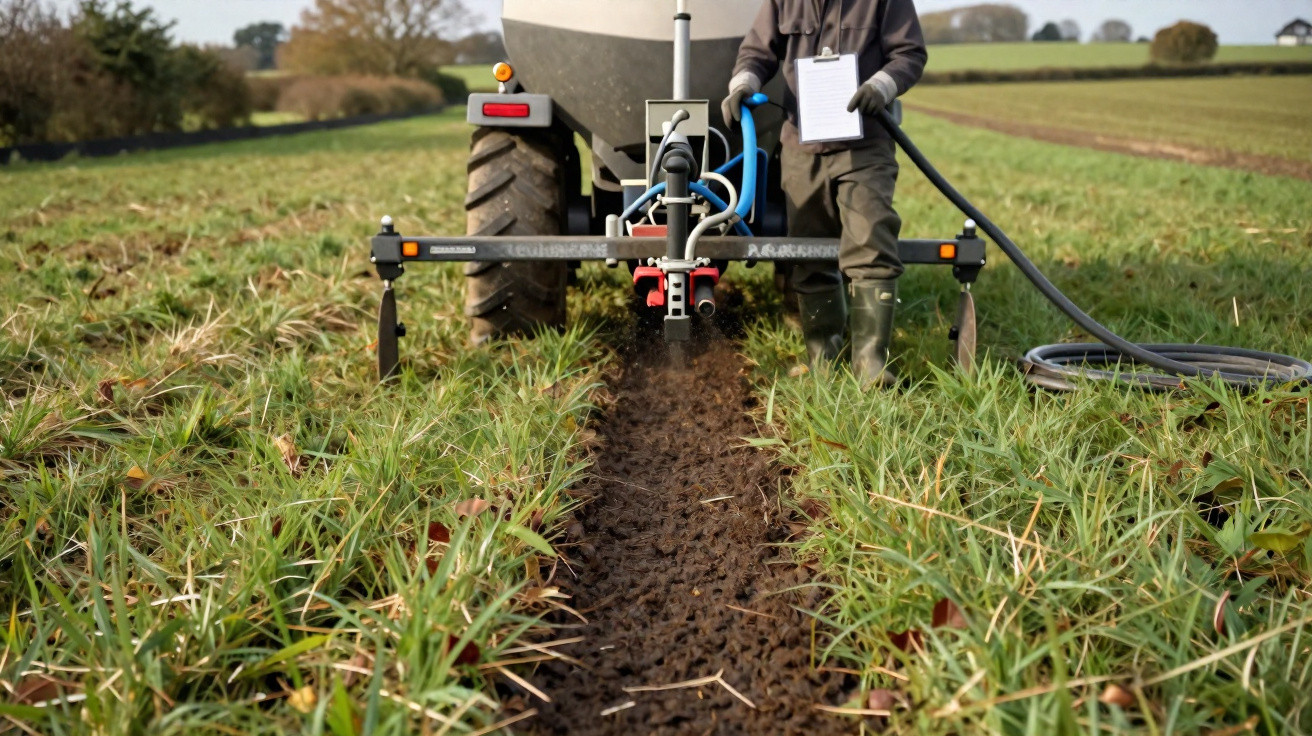
When slurry storage is tight and the weather has disrupted grazing, silage or harvest work, news of a spreading deadline extension can feel like a lifeline. The important point is simple: an extension is not a general permission to spread regardless of conditions. It may apply only in certain places, for particular materials, or to farmers who have registered or notified an authority.
Before the tanker leaves the yard, check the formal notice, assess the field and forecast, and make sure the application still meets crop need. A changed calendar date does not make waterlogged ground, heavy rain or a field beside a drain suitable for slurry.
Start with the official notice
Do not rely on a message in a group chat, a contractor's diary or an old social media post. If an extension is announced, find the current written notice from the relevant authority and read the conditions in full.
Check:
- the last date on which spreading is permitted;
- when the closed period begins or resumes;
- whether the change applies across the whole area or only named locations;
- the types of slurry, manure or soiled water covered;
- whether registration, notification or a record is required before spreading;
- any additional limits on rates, fields or application methods.
Save a copy of the notice and make a note of when you checked it. If there is any uncertainty, contact the relevant agricultural or environmental authority before spreading rather than making assumptions.
A deadline extension gives extra time only where the stated conditions are met. It does not remove the duty to prevent pollution.
Rules are not the same across the UK and Ireland
Slurry and manure rules differ between England, Wales, Scotland, Northern Ireland and the Republic of Ireland. Dates, definitions, nutrient limits and notification arrangements are not interchangeable.
A contractor working across borders, or a business with land in more than one jurisdiction, should check the requirements applying to each parcel of land. The rules may depend on factors including:
- whether the land is in a Nitrate Vulnerable Zone or equivalent regulated area;
- whether the material is livestock slurry, poultry manure, digestate or soiled water;
- whether the receiving crop is grassland, stubble, a cover crop or arable ground;
- soil type, slope, drainage and the risk of run-off;
- proximity to streams, ditches, ponds, springs, boreholes and field drains;
- environmental permits or local restrictions.
In England, start with current GOV.UK guidance on Farming Rules for Water and Nitrate Vulnerable Zones. In Wales, use guidance from the Welsh Government and Natural Resources Wales. In Scotland, check SEPA and Scottish Government requirements. In Northern Ireland, consult DAERA guidance.
Do not assume that a relaxation announced elsewhere applies to your holding. The formal wording, not the headline, is what matters.
Why extensions can be considered
Closed periods and restrictions on slurry spreading are designed to reduce the risk of nutrients reaching water when crop growth is limited and rainfall can carry material off fields or through drains.
Seasons do not always run to plan. Prolonged dry weather can reduce grass growth and nutrient uptake. Persistent rain can stop machinery travelling without damaging soil. Delayed silage work, altered grazing and pressure on stores can all narrow the available window.
Authorities may sometimes announce limited flexibility after exceptional conditions. That does not mean slurry should be spread simply because there is space in the calendar. The practical question remains: can the soil and crop take the application without causing pollution or compaction?
Storage pressure is a serious management issue, but it does not make an unsuitable field safe.
Make the field check before filling the tanker
A quick walk of the field can prevent an expensive and potentially harmful decision. Inspect the area you intend to spread, not just the gateway or the most freely draining corner.
1. Look at soil condition
Do not spread on ground that is waterlogged, flooded, frozen or snow-covered. Take care with very dry, cracked soil too: slurry can move quickly through cracks, especially where land drains are present.
Look for standing water, deep wheel marks, smeared soil, poaching and places where a tanker is likely to rut. Heavy traffic on vulnerable soil can damage grass cover and create run-off routes that last well beyond the spreading day.
2. Trace where water would go
Identify ditches, streams, ponds, grips, roadside gullies, field drains, springs and wells. Consider slopes and hollows, not just visible watercourses.
Keep to the applicable buffer distances and any wider margins required by local conditions or the official notice. Avoid turning, coupling hoses or parking beside a drain: leaks and overflows often happen at the least convenient point.
3. Check the forecast properly
Review the forecast for the application period and the following days. Heavy or prolonged rain soon after spreading can carry slurry into watercourses, even from a field that looked workable when you started.
Weather forecasts are not perfect, but a clear warning of significant rain is a strong reason to wait. Do not let an approaching deadline turn a poor forecast into an acceptable risk.
4. Consider whether the crop can use it
Grass or another actively growing crop should have a realistic prospect of taking up the nutrients. Use your nutrient management plan, previous applications and, where available, slurry analysis.
Late-season slurry should be matched to crop need, not used as a disposal route for surplus storage. Take account of nutrients supplied through fertiliser, manure, grazing livestock and previous slurry applications.
Confirm registration and paperwork first
Some temporary arrangements may require a farm business to register or notify an authority before using the additional period. Others may have specific record-keeping conditions.
Complete any required process before spreading. Keep confirmation emails, reference numbers or screenshots with your farm records. If a contractor is applying slurry, make sure they know the conditions and that both parties are clear about the fields, rates and permitted dates.
Your application record should include:
- field name or number;
- date and approximate time of spreading;
- slurry or manure type;
- estimated application rate and area covered;
- weather and ground conditions;
- crop or grass cover;
- relevant registration or notification reference.
Records are useful for nutrient planning as well as inspections. They also help identify whether certain fields repeatedly create problems in wet autumns.
Use careful application practice
Where spreading is permitted and conditions are suitable, good technique makes better use of slurry and reduces losses.
Check hoses, couplings, valves and the applicator before leaving the yard. A small failure near a ditch or drain can quickly become a pollution incident. Plan the route through the field to reduce unnecessary traffic and avoid repeated turning on vulnerable headlands.
Apply evenly, at a rate appropriate to the crop and soil. Avoid overlaps, particularly near boundaries and watercourses. Calibrate equipment as far as practical, and make sure the operator can see where slurry has already been placed.
Low-emission application equipment may help place slurry closer to the soil surface and improve accuracy, but it is not a substitute for sound judgement. Even the best equipment cannot make saturated soil or a poor weather window acceptable.
The best final slurry application is one the crop can use, the ground can carry and the weather will not wash away.
Common mistakes when a deadline changes
Pressure at the end of the spreading season can lead to rushed decisions. Watch for these avoidable mistakes:
- Assuming the extension applies automatically. It may require registration or cover only specified areas.
- Using last year's dates. Check the current notice and the current year.
- Treating a permitted date as a guarantee of suitable conditions. Field condition and forecast still matter.
- Forgetting separate rules for soiled water. Check definitions and requirements carefully.
- Spreading every available field. Steep, poorly drained or drain-connected land may need to be left out.
- Ignoring previous nutrient applications. Crop demand does not increase because the store is full.
- Leaving work until the final afternoon. A breakdown, rainfall or contractor delay can remove the remaining window.
- Using headlands beside water as turning areas. This raises the risk of spills where they can do most harm.
Keep people, livestock and water safe
Slurry work involves serious machinery and gas hazards. Keep children, visitors and unnecessary helpers away from tankers, hoses, pumps and agitation points. Use safe systems of work and make sure guards, lights and brakes are in good order.
Never enter a slurry tank, pit or reception area. Slurry gases can overcome people rapidly and can be fatal. Take particular care during agitation: keep livestock and people clear, ventilate buildings as appropriate, and follow current farm safety guidance.
If slurry reaches a drain, ditch or watercourse, stop the source if it is safe to do so. Prevent further flow only where you can do it without putting yourself at risk, then report the incident promptly through the appropriate environmental incident route for your nation. Do not enter contaminated water or attempt a dangerous clean-up alone.
Use the extra time to improve next season's plan
An extension should be treated as a contingency, not part of the normal slurry calendar. Once the busy period has passed, review what caused the pressure: limited storage margin, delayed cutting, awkward field access, contractor availability, poor records or a lack of suitable autumn fields.
Build more flexibility where possible. Monitor storage through summer, maintain machinery before autumn, map drains and vulnerable areas, and identify fields that are suitable only in genuinely dry conditions. Recording applications as they happen makes it easier to plan rates and timing with confidence.
If an extension is announced, pause before acting. Read the notice, register if required, inspect the field and forecast, then spread only where the application is safe, lawful and useful to the crop. That approach protects water, soil, livestock and the long-term resilience of the farm.





Comments
No comments yet. Be the first to comment!
Leave a Comment