
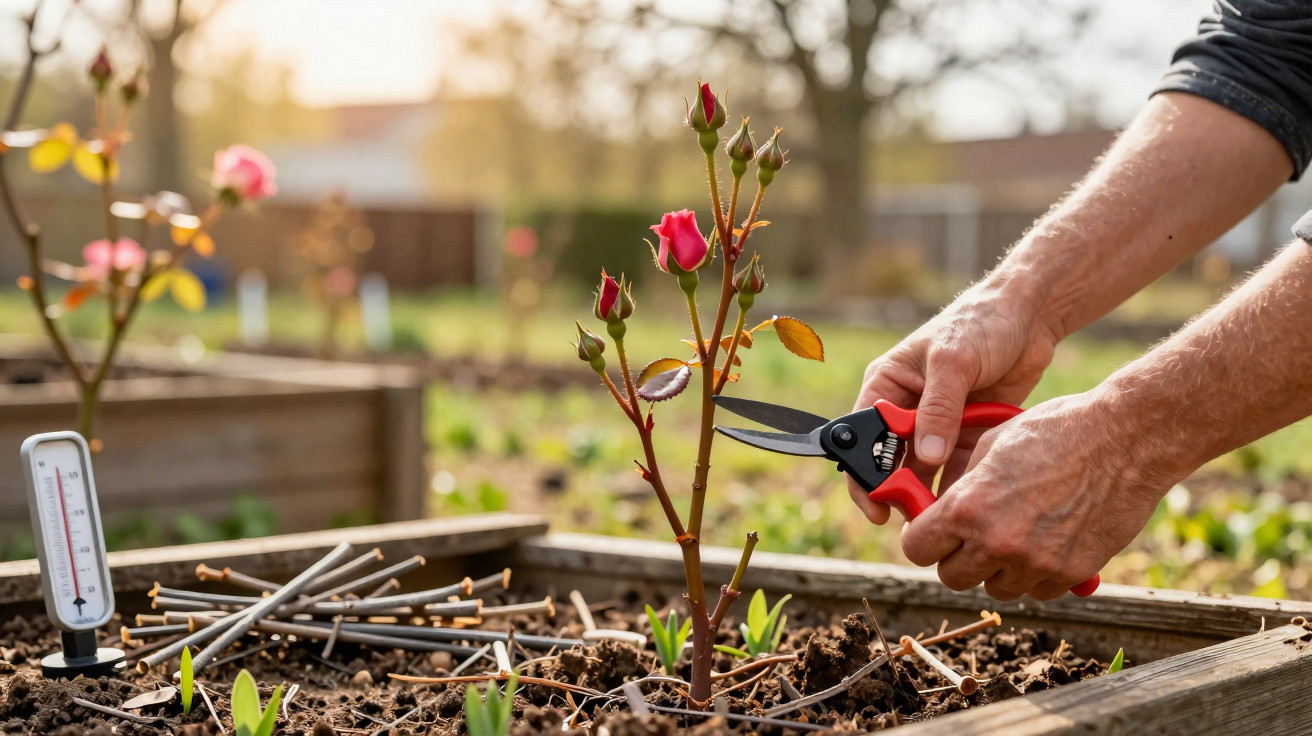
Many keen gardeners face the same dilemma every year: winter begins to loosen its grip and the buds start to swell – but when is the right day to reach for the secateurs? Cut a few weeks too early and frost can destroy the new shoots. Leave it too late and the plant has already squandered valuable energy. Anyone hoping to turn their roses into a sea of colour in spring needs one thing above all: the right timing.
The crucial window: when roses should be pruned in spring
Pruning roses is not a job to be done “at some point in spring”. The timing has a major effect on both plant health and the abundance of flowers. The key period lies between winter dormancy and full active growth.
The best time to prune roses is usually between mid-February and mid-March – just before growth properly begins.
During this period, the plant slowly wakes up: sap starts to rise and buds prepare to open. Pruning at this stage directs its energy into selected shoots. Cutting much earlier encourages soft, moisture-rich young growth that can effectively be “boiled” by a sudden cold snap. One frosty night can undo all the work.
Use the thermometer, not the calendar: when the risk of frost eases
Gardeners should pay less attention to fixed dates and more to temperatures. Once nights are consistently free from hard frost, the prime period for rose pruning begins. In many areas, this starts in the second half of February, although March is safer.
The rule of thumb is simple: it is better to prune slightly late than too early. A modest delay may cost a few days of progress, while pruning prematurely can set the whole plant back.
Watch the buds: the plant gives its own signal
You can judge the timing even more accurately by looking at the buds. When small red or pink swellings appear and stand out clearly from the bark, the plant is beginning to grow. Sap is rising, but the leaves have not yet fully opened.
The ideal moment: buds are swelling and clearly visible, but there are not yet fully formed leaves.
Waiting until this stage makes the best use of the plant’s natural energy. Once there are already plenty of leaves, the shrub is working at full capacity. Heavy pruning at that point causes energy loss, as the rose must mobilise its reserves all over again.
Location matters: why roses are not all pruned on the same day
From Flensburg to Bolzano, the climate varies enormously – there is simply no single “right” day to prune roses across an entire country. To manage roses properly, take account of your garden’s own microclimate.
Mild areas: act early before roses get ahead of you
In wine-growing areas, along the Lower Rhine, around Lake Constance or in sheltered city-centre locations, spring arrives noticeably sooner. Severe frost is rare there from late February onwards. Anyone waiting until the end of March to use the secateurs may find fully developed shoots already present – and end up cutting away fresh growth.
- Mild regions: rose pruning is usually possible from mid to late February
- Sheltered courtyards and south-facing slopes: often ready especially early
- In particularly warm spots: keep an eye on roses rather than waiting by instinct
Cooler sites and higher ground: be patient until March
In northern and eastern Germany, at higher elevations or in exposed sites, frost often lingers for longer. Patience pays off here: waiting until mid-March, or even late March, protects shoots from late frost and prevents frost damage to fresh cuts.
Particularly in areas prone to frost, later pruning can deliberately delay new growth slightly. The buds then open when the danger of icy nights is lower.
What happens inside the plant: why timing matters so much
Pruning roses is not simply a cosmetic haircut for the garden; it is a major intervention in the plant’s sap flow. Prune at the right time and you direct its energy; prune at the wrong time and you waste it.
Make purposeful use of rising sap
While the plant is dormant in winter, its reserves remain in the roots. As temperatures rise, that energy moves back into the shoots and buds. This is exactly the point at which ideal pruning takes place: a small number of well-positioned buds receive the full supply of energy, so the rose produces vigorous growth and large, sturdy flowering stems.
If you cut too late, when numerous leaves are already present, the plant has already invested part of its reserves. Every piece of green growth removed at that stage has taken hard work from the rose – and must be replaced.
Avoid wasting energy
Pruning too early or too late drains a rose’s strength – perfect timing saves energy and produces more flowers.
Pruning well after growth has started forces the plant into a “restart”. This often results in weaker shoots, more susceptible plants and less lavish flowering. Older rose bushes show the effects in particular: they recover more slowly, grow less readily and remain more bare.
How to make the perfect cut: technique for rose-pruning day
Once the right time has arrived, careful technique is essential. Poor cuts can encourage fungal disease, rot and misshapen growth; good cuts bring air, light and strong flowering shoots.
Tools: nothing works without a sharp, clean cut
Well-maintained, sharp rose secateurs are essential. Blunt blades crush the wood, tear the bark and create entry points for disease. Disinfect the blades before pruning, particularly if diseased plants have been present in the garden.
The three-bud rule for bush roses
For many traditional bedding roses and bush roses, one straightforward rule has proved effective:
| Step | What to do |
|---|---|
| 1 | Select healthy, vigorous shoots |
| 2 | Starting from the base of the shoot, count upwards to three clearly visible buds |
| 3 | Cut just above the third bud |
| 4 | Ensure the top bud faces outwards |
This ensures that the new shoot grows outwards, opening the shrub like a bowl. More light can then reach the centre, while the rose stays airy and is less prone to disease.
The correct cutting angle
Make the cut at a slight angle, roughly five millimetres above the chosen bud. The slope should run away from the bud. This lets rainwater drain off instead of collecting directly above it. The cut surface dries more quickly, giving fungi less opportunity to establish.
Spring clean-up in the rose bed: making room for fresh strength
Alongside the main shaping cut, every rose needs a thorough clear-out. Diseased and unproductive wood blocks light and energy, acting like a traffic jam within the shrub.
Remove dead and weak wood decisively
Old, dead shoots can be recognised by their grey-brown colour and dry, brittle texture. A quick test cut reveals the difference immediately: dead wood remains brown inside, whereas healthy wood is pale and greenish.
Very thin, feeble twigs are also unlikely to produce flowering stems strong enough to hold blooms. Removing them promptly strengthens the more vigorous shoots and stops the rose from spreading its resources too thinly.
Air and light at the centre of the shrub
Ideally, a small bird should be able to fly through the rose bush without bumping into anything – that is how open the centre should be.
Remove every shoot that crosses, rubs against another or grows inwards. Constant rubbing creates wounds, which are ideal entry points for fungal spores. With an open structure, the shrub dries more quickly after rain and leaf diseases have a much harder time.
Care after pruning: helping roses through their fresh start
After a hard spring prune, a rose can look rather “bare”. It has fresh wounds and very little foliage. At this stage, it is more sensitive and benefits from support.
A thin layer of mature compost around the root area helps the plant get going again. In exceptionally dry springs, light watering is worthwhile so that the rose can produce new shoots without stress. In windy sites, a loose support stake can prevent young shoots on highly bred varieties from snapping.
Gardeners who know their roses well can fine-tune the timing a little each year. Make a note of when you pruned and how profusely the roses flowered. Over time, this creates a personal rose calendar suited to your local area – and improves the chance of what everyone wants: a rose bed that quite literally explodes with flowers in spring.






Comments
No comments yet. Be the first to comment!
Leave a Comment