
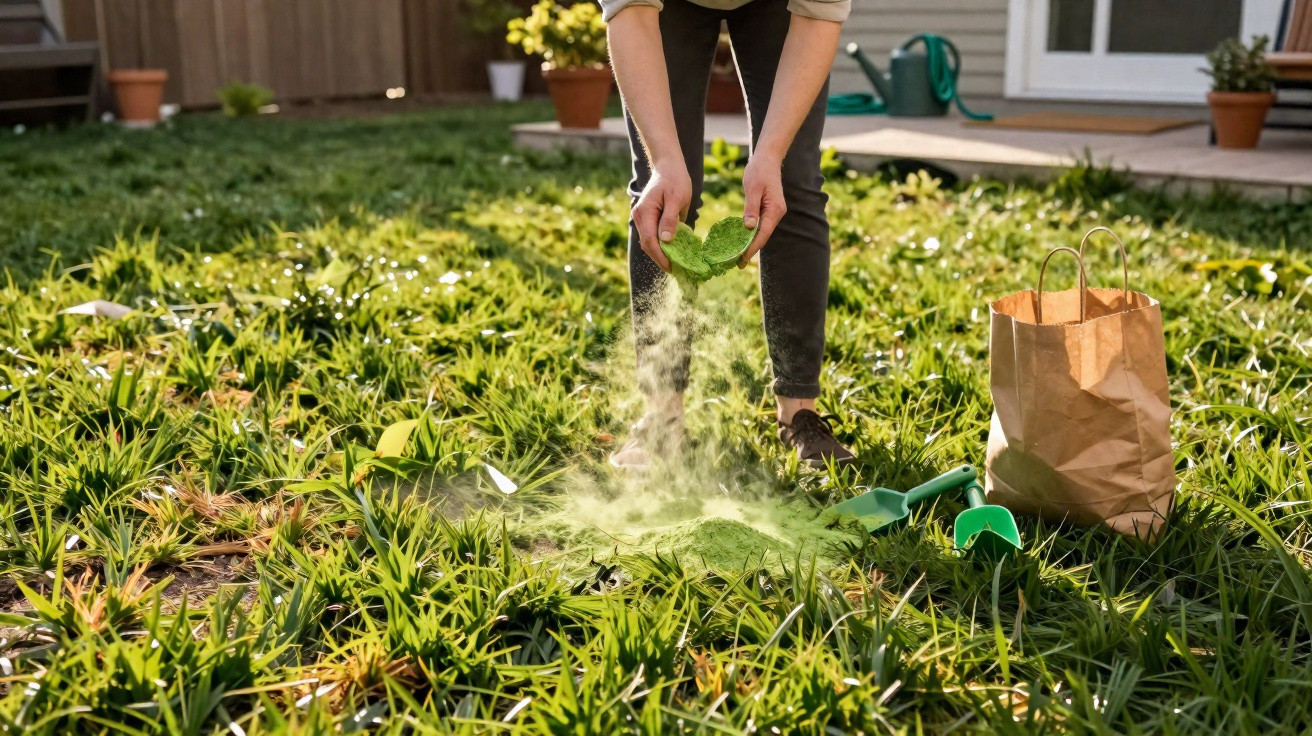
In March, a simple powder can transform your lawn.
When spring arrives, many amateur gardeners first think of getting out the lawnmower or applying a generous dose of fertiliser. Professionals often choose something else: an unassuming mineral powder mixture that kills moss within days and gives grass a noticeably deeper shade of green. Applied correctly in March, it can give your lawn a far stronger start to the season.
Why lawns look so worn out after winter
For several months, lawns receive very little sunlight while enduring constant damp and frost. The blades weaken and the root system operates at minimal capacity. At the same time, the soil becomes compacted: rain, snow and foot traffic compress its structure, making it harder for air and water to reach the roots.
These are precisely the conditions moss thrives in. It spreads between the grass blades, depriving the lawn of light, space and nutrients. By spring, this often leaves an uneven surface, with bare patches in some places, dense cushions of moss in others, and pale, yellowish blades in between.
As March begins, conditions gradually start to improve. Days become longer, temperatures rise and root growth resumes. The grass attempts to grow again, but the moss is already firmly established and taking centre stage. This is when targeted action is particularly worthwhile.
Early March is the point at which a single task can suppress moss and stimulate grass growth.
The key powder treatment: iron(II) sulphate for stopping moss and achieving deep green grass
In this situation, gardening professionals frequently use iron(II) sulphate, usually sold as iron fertiliser or lawn moss killer. It is a pale, crystalline powder that can be dissolved in water or spread in granular form.
How the powder treatment works against moss
Iron(II) sulphate acts very aggressively on moss. Within a few hours to several days of treatment, the moss turns dark brown to black and dies. The moss cushions then dry out and can later be swept away easily or removed from the turf with a scarifier.
The crucial point is that grass tolerates this treatment far better than moss does. When used at the correct dosage, it causes little harm to lawn plants while depriving moss of the conditions it needs to survive.
Why the grass becomes noticeably greener
The second effect occurs within the blades themselves. Iron is essential to the formation of chlorophyll, the green pigment that allows plants to convert sunlight into energy. If the soil receives the right amount of iron, grass can quickly produce more chlorophyll, resulting in visibly richer green growth.
Many gardeners report that their lawn looks noticeably fuller, stronger and “fresher” just a few days after treatment.
Iron(II) sulphate is also relatively inexpensive and widely available compared with many specialist fertilisers. This can be especially appealing for larger lawns.
The right time in March: wait until the soil is “awake”
The powder treatment is worthwhile once the lawn begins growing again but moss is still dominant. The ideal period is early to mid-March, when:
- daytime high temperatures are generally above 8–10°C;
- prolonged frost is no longer expected;
- the soil is slightly damp but not waterlogged.
On frozen or very wet ground, the product may work unevenly. During extended dry spells, there is insufficient moisture in the soil for the active ingredient to distribute properly.
How to apply iron(II) sulphate correctly
Liquid application: even coverage and easier control
Many manufacturers recommend dissolving the powder in water and applying it with a watering can or pressure sprayer. A commonly stated dosage is around 20 to 30 grams of powder per litre of water, always following the instructions on the packaging.
- Weigh out quantities rather than dosing “by eye”.
- Dissolve the powder completely in water and avoid lumps.
- Spread it evenly across the entire lawn instead of treating only visible patches.
One practical tip is to imagine or mark out a grid, then work methodically across the lawn strip by strip. This helps prevent overlaps and missed areas.
Protecting yourself and the surrounding area
Although iron(II) sulphate is not considered poisonous in the conventional sense, it can irritate the skin and eyes. Basic precautions will protect both you and those around you:
- Wear gloves, and ideally wellington boots too.
- Use simple safety glasses when spraying creates a mist.
- Keep pets and children off the area while treatment is being applied.
Take care around stone surfaces. If the solution reaches patio slabs, paving or pool edges, it can leave stubborn rust stains. The safest approach is to cover paths and stonework before starting, or leave a generous untreated margin around the edges.
Iron stains on stoneware often require considerable effort to remove, or may never be fully removable.
Weather window: allow for a dry spell
After application, the weather should remain dry for at least 24 hours. Heavy rain can wash the active ingredient away before it has had enough time to react. Light morning dew is not an issue, but a substantial shower is.
What happens after treatment - and what to do next
In the days following application, parts of the lawn may initially appear darker or slightly patchy. This should settle once the dead moss cushions have been removed and the grass has regrown.
Two weeks later: remove the moss and let the lawn breathe
After around 10 to 14 days, the moss will generally be completely dead and dry. The next stage is then to:
- work over the lawn with a scarifier or sharp rake;
- thoroughly rake out the black moss remains;
- collect and dispose of the dead material rather than leaving it on the lawn.
This opens up the turf, allowing air and water to penetrate further into the soil. It also creates suitable spots for grass seed to germinate.
Overseeding and fertiliser: an opportunity for a denser lawn
The de-mossed, roughened surface is ideal for overseeding. Apply an appropriate lawn seed mix to sparse areas, preferably one suited to the setting, such as shade-tolerant lawn seed, hard-wearing lawn seed or ornamental lawn seed. Work it in lightly, then roll or tread the surface firm.
If desired, add an organic lawn fertiliser with a moderate nitrogen content. This supports both the new and established blades, encouraging more even growth throughout the season.
Risks, limitations and alternatives to the powder treatment
Iron(II) sulphate is powerful, and as with any strong treatment, it has limitations and potential side effects. Using too much can scorch the tips of grass blades, particularly in very warm weather. Pale patches or brown edges may result.
Dosage matters environmentally too. If a larger quantity enters flower beds or a neighbouring property, it may affect more sensitive plants there. Accurate application and consideration for the areas surrounding the lawn are worthwhile.
Anyone who prefers not to use a mineral solution can also reduce moss by combining scarifying, sanding and soil improvement. These approaches require more time and effort, but are gentler.
Why using iron(II) sulphate in March means less work in the long term
A thick, healthy lawn makes it harder for moss to establish over time. Treating early in the year gives the grass a head start: it fills gaps sooner, casts more shade over the soil and keeps moisture moving more effectively. One powder treatment in March can therefore lay the foundation for a lower-maintenance lawn in summer.
Finally, it is useful to consider the causes. Moss often benefits from waterlogging, shade and nutrient deficiency. Those who address these factors after treatment as well - through improved drainage, suitable mowing and measured fertilising, for example - will need to repeat the powder treatment far less often.



Comments
No comments yet. Be the first to comment!
Leave a Comment